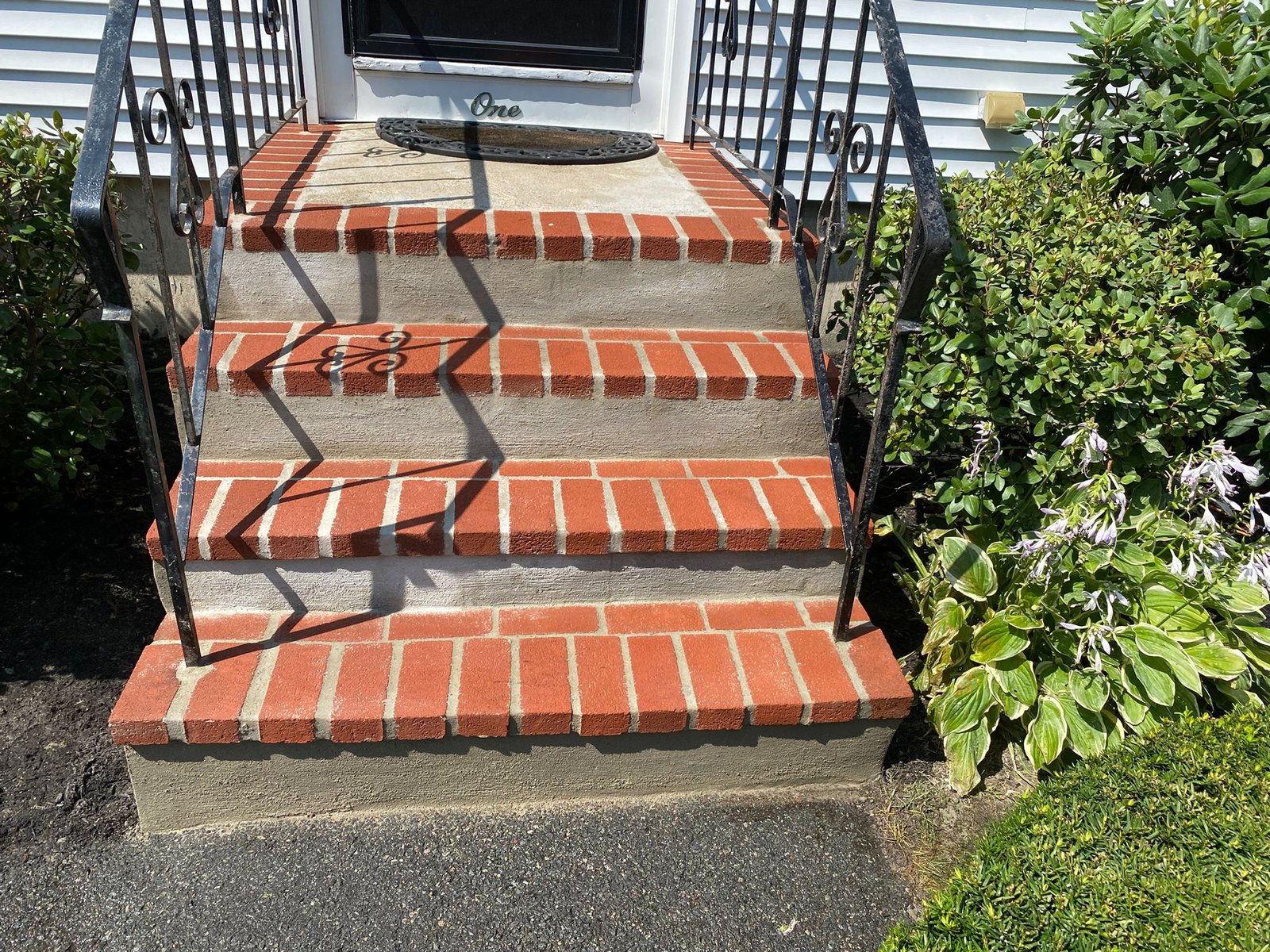
The strongest mortar is not automatically the best mortar for an older brick building.
Many historic Boston homes were constructed using relatively soft bricks and lime-rich mortar. These walls were designed to manage moisture and minor movement differently from modern masonry systems.
When deteriorated historic mortar is replaced with a mixture that is too hard, dense or impermeable, stress and moisture may be transferred into the bricks. Instead of the mortar gradually weathering and being replaced, the brick faces may crack, flake or spall.
This does not mean Portland cement should never be used. Many modern and transitional masonry buildings were constructed with mortars containing Portland cement, and carefully designed blended mortars may be appropriate for some older properties.
The correct choice depends on the existing bricks, original mortar, wall construction, exposure and repair objectives—not simply the building’s age.
Quick answer: Is lime mortar or Portland cement better for old bricks?
Lime-rich mortar is often more compatible with soft historic brick because it is generally:
- Softer than high-cement mortar
- More vapor-permeable
- More accommodating of minor movement
- Intended to weather before the brick
- Easier to remove during future repointing
A mortar containing Portland cement may be suitable when:
- The original mortar contained Portland cement
- The bricks are sufficiently strong and dense
- Greater early strength is needed
- Exposure conditions justify a blended formulation
- Testing or evaluation supports its use
- The mixture remains compatible with the masonry
The replacement mortar should match or complement the original mortar’s composition, strength, vapor behavior, color, texture and joint profile.
What is lime mortar?
Traditional lime mortar is generally made from:
- Lime
- Sand
- Water
Different lime binders and formulations produce different properties. Historic mortars can also contain local aggregates, natural pigments, brick dust or other materials.
Lime-based mortar hardens through chemical processes that depend on the lime type. Traditional non-hydraulic lime mortar primarily hardens through carbonation, while hydraulic lime can set in the presence of water.
Lime mortar has been used for centuries in brick and stone construction.
What is Portland cement mortar?
Portland cement is a hydraulic binder that develops strength relatively quickly when mixed with water. Modern masonry mortars frequently combine:
- Portland cement
- Lime or other plasticizing components
- Sand
- Water
Mortar classifications and properties vary substantially. A modern mortar is not defined only by the presence of Portland cement; the proportions and full mixture determine its performance.
High-cement mortars are generally stronger, harder and less vapor-permeable than traditional lime-rich mortars.
Those characteristics can be useful in suitable modern construction but problematic when paired with soft historic brick.
Why mortar should be the sacrificial part of a historic wall
Historic masonry is intended to work as a system.
Mortar surrounds the bricks and is relatively accessible for future maintenance. When moisture and seasonal movement affect the wall, the mortar joints should generally weather before the masonry units.
The National Park Service describes historic mortar as sacrificial: it allows moisture and salts to move through the joints so that replaceable mortar deteriorates instead of irreplaceable brick or stone.
When the mortar becomes too hard or impermeable:
- Moisture may remain in the brick
- Salts may crystallize within masonry pores
- Brick faces may spall
- Cracks may pass through bricks instead of joints
- Wall drying may be restricted
- Future mortar removal may damage brick edges
Repointing should restore this balance rather than simply make the joints as strong as possible.
Lime mortar versus high-cement mortar
| Property | Lime-rich mortar | High-Portland-cement mortar |
| Relative hardness | Generally softer | Generally harder |
| Flexibility | Accommodates minor movement more readily | More rigid |
| Vapor permeability | Generally higher | Generally lower |
| Early strength | Develops more slowly | Develops more quickly |
| Future removal | Often easier around soft brick | Can damage brick during removal |
| Historic compatibility | Often suitable, subject to analysis | Depends heavily on existing materials |
| Weathering role | Commonly acts sacrificially | May outlast or overpower soft bricks |
| Modern applications | Selective and restoration-focused | Common in modern masonry |
This comparison is general. Actual properties depend on the complete mortar formulation, ingredients, mixing, curing and workmanship.
Why older Boston brickwork needs special consideration
Boston properties may include:
- Soft historic brick
- Dense later-period brick
- Multi-wythe mass masonry walls
- Brick veneers
- Fieldstone foundations
- Brick chimneys
- Mixed-era additions
- Previous cement-rich repairs
- Painted masonry
- Walls altered several times
A single building may contain more than one mortar type. For example, original lime mortar may exist beside a later Portland-cement repair.
Before repointing, the contractor should distinguish original materials from previous alterations.
Signs that existing mortar may be incompatible
Possible warning signs include:
- Brick faces spalling beside hard mortar
- Mortar joints remaining intact while bricks crack
- Narrow, dense gray repairs around softer red brick
- Brick edges breaking during mortar removal
- Moisture trapped behind coatings
- Cracks passing directly through bricks
- Repeated brick replacement near previous repairs
- Hard ribbon-like mortar separating from the wall
These symptoms do not prove that Portland cement is the only cause. Roof leaks, rising damp, salt exposure, freeze-thaw cycles and abrasive cleaning should also be investigated.
Why Portland cement can damage soft brick
The risk comes from incompatibility rather than the ingredient’s name alone.
Excessive hardness
If the mortar is much harder than the brick, structural and thermal movement may crack the brick instead of the joint.
Reduced vapor permeability
Dense mortar may restrict drying through the joints. Moisture may remain in the bricks, where freezing and salt crystallization can cause deterioration.
Aggressive removal
Hard mortar often requires more effort to remove. Power tools used without sufficient care can cut into brick edges and permanently widen the joints.
Different movement behavior
Historic walls expand, contract and settle. A rigid repair may not accommodate movement in the same way as the original mortar.
Is Portland cement always wrong for historic masonry?
No.
Portland cement began appearing in mortar mixes during the late 19th and early 20th centuries, and many historic buildings contain blended mortars.
A compatible repair mixture may include a controlled amount of Portland cement when:
- Original mortar analysis supports it
- The brick is strong enough
- Exposure requires particular performance
- The contractor is reproducing a known historic mixture
- A preservation specification calls for a blend
- The mixture remains appropriately softer than the masonry
The mistake is assuming that every old wall needs pure lime or that every repair needs high-strength cement.
Mortar selection should be evidence-based.
How is historic mortar evaluated?
A masonry assessment may consider:
Visual examination
The contractor reviews:
- Color
- Texture
- Sand size
- Joint width
- Joint shape
- Hardness
- Weathering
- Previous repairs
Simple field observations
Controlled field observations can help compare relative hardness and identify differences between mortar areas. They are not a substitute for laboratory analysis when precise specifications are required.
Mortar analysis
For significant or historically sensitive projects, a mortar sample may be analyzed to identify:
- Binder characteristics
- Binder-to-aggregate ratio
- Aggregate color and grading
- Possible pigments or inclusions
- Approximate composition
An analysis helps inform a compatible replacement, but the new mortar may not be an exact chemical reproduction. Performance and compatibility remain essential.
Sample panel
A small repointed area can be prepared so the owner, contractor or preservation authority can review:
- Color after curing
- Texture
- Joint profile
- Workmanship
- Cleaning method
- Overall appearance
Mortar color can change as it dries, so freshly installed samples should not be judged too quickly.
Why sand matters in mortar matching
Sand affects:
- Color
- Texture
- Workability
- Shrinkage
- Strength
- Finished appearance
- Joint durability
Historic mortar often displays the color and texture of its aggregate. Matching only the binder color while ignoring the sand can produce noticeably different joints.
The aggregate should be selected for compatible grading, color and texture.
Why joint profile matters
The joint profile is the finished shape of the visible mortar.
Common profiles include:
- Concave
- Flush
- Weathered
- Struck
- V-shaped
- Beaded
- Grapevine or decorative profiles
A profile affects both appearance and water shedding. Historic repointing should reproduce the original or historically appropriate profile unless a documented reason supports a change.
Historic mortar repointing process
Step 1: Inspect the wall
The contractor identifies failed joints, spalled bricks, cracks, movement and water-entry points.
Step 2: Correct moisture problems
Roof, gutter, chimney, flashing and drainage defects should be repaired before repointing.
Step 3: Evaluate the existing mortar
Original mortar should be distinguished from later repairs. Material characteristics and joint details are documented.
Step 4: Prepare a mortar specification
A compatible mixture is selected based on the masonry and project requirements.
Step 5: Create a sample panel
The sample confirms appearance, texture and joint finishing.
Step 6: Remove failed mortar carefully
Deteriorated mortar is removed to an appropriate depth without damaging brick edges.
Step 7: Clean and prepare the joints
Loose material and dust are removed. The joints are prepared to receive new mortar.
Step 8: Install replacement mortar
Mortar is compacted into the joints in a controlled manner.
Step 9: Finish the joints
The new joints are tooled to match the intended profile.
Step 10: Cure and protect the work
Fresh mortar is protected from rapid drying, freezing, direct sun and heavy rain.
Why a mortar “recipe” should not be selected from the internet
Mortar proportions suitable for one wall may damage another.
Variables include:
- Brick strength and absorption
- Existing mortar
- Wall exposure
- Joint depth
- Building movement
- Climate
- Sand
- Binder type
- Curing conditions
- Historic requirements
For this reason, homeowners should not choose mortar solely from a generic online ratio or the highest strength listed on a bag.
Can hard cement mortar be removed from old brick?
It can often be removed, but the process requires care.
Potential challenges include:
- Chipping brick edges
- Widening joints
- Cutting into brick faces
- Creating uneven joint depths
- Damaging already spalled bricks
- Disturbing loose masonry
Hand tools or carefully controlled power tools may be selected depending on the mortar, joint width and masonry condition.
A test area should be completed before large-scale removal begins.
How much does lime-mortar repointing cost?
Cost factors include:
- Size of the area
- Building height
- Scaffolding
- Mortar hardness
- Removal difficulty
- Mortar analysis
- Custom sand or pigments
- Brick replacement
- Decorative profiles
- Access
- Historic review requirements
- Curing and weather protection
Historic repointing may require more preparation and craftsmanship than ordinary mortar replacement. However, compatible work helps protect the original bricks and can reduce future replacement needs.
Maintaining older brickwork
Homeowners should:
- Keep gutters and downspouts functional
- Repair roof and flashing leaks
- Monitor mortar erosion
- Avoid aggressive pressure washing
- Avoid inappropriate waterproof coatings
- Prevent soil and mulch from contacting vulnerable brick
- Check chimneys after winter
- Correct drainage problems
- Repair spalled bricks
- Request compatible mortar for every repair
- Keep records of mortar specifications
Moisture management and compatible repairs are the foundation of long-term masonry preservation.
Historic masonry repointing in Boston
iFix Masonry and Home Improvements provides professional repointing services for older and modern properties throughout Greater Boston.
Our masonry services include:
- Mortar condition assessments
- Lime-rich mortar repointing
- Compatible blended mortar
- Mortar color and texture matching
- Brick replacement
- Tuckpointing
- Historic masonry restoration
- Chimney repointing
- Foundation masonry repair
- Moisture-source assessment
We serve Boston, Cambridge, Brookline, Newton, Waltham, Canton, Dedham, West Roxbury and surrounding communities.
Request a mortar and brickwork assessment
If your older brick home has hard gray mortar, spalling bricks, open joints or repeated repair failures, arrange an inspection before completing additional repointing.
Call: (617) 251-3916
Email: info@ifixmasonry.com
Address: 437 Turnpike St, Canton, MA 02021
Contact iFix Masonry for historic brick repointing and mortar matching in Boston.