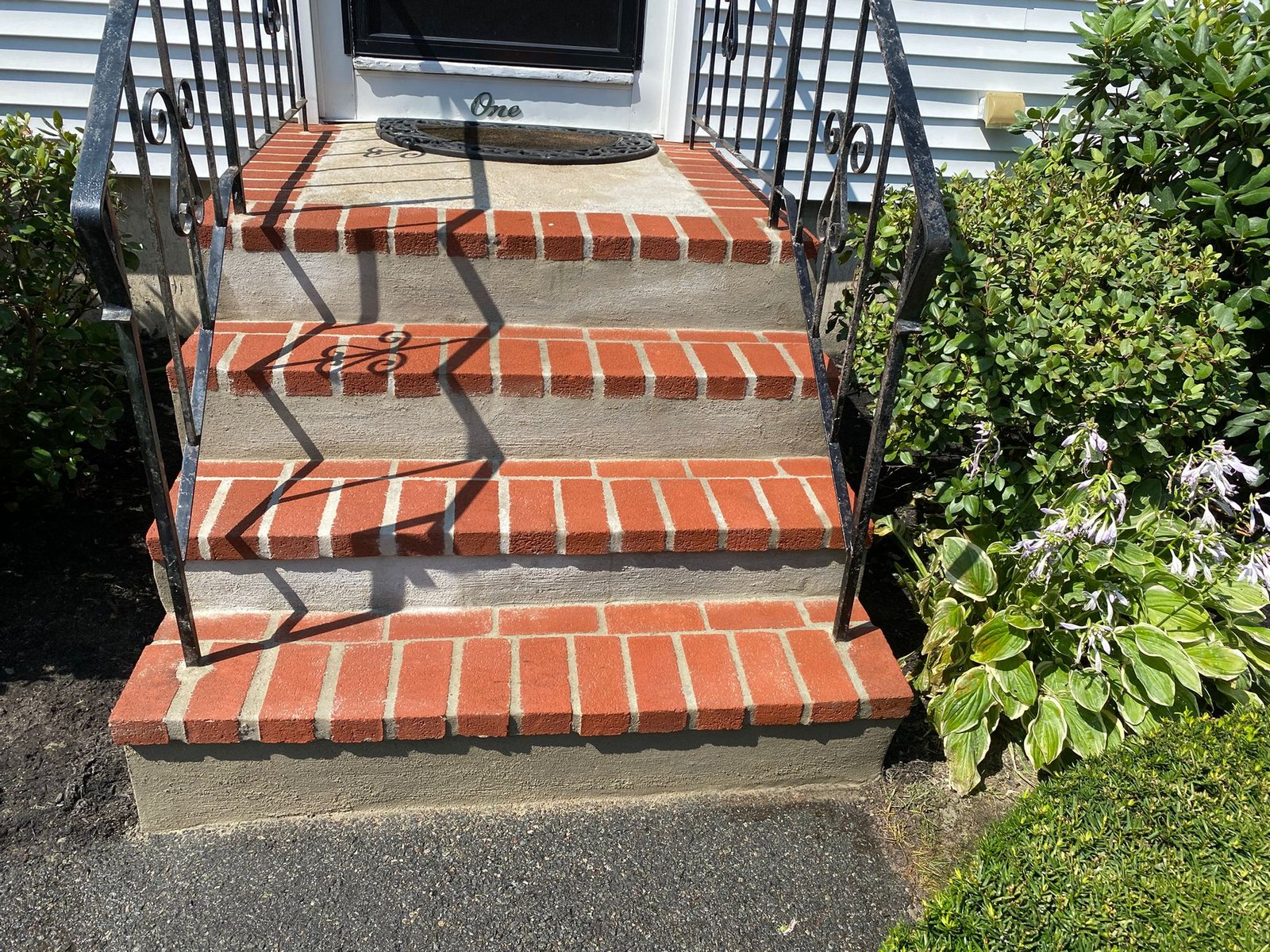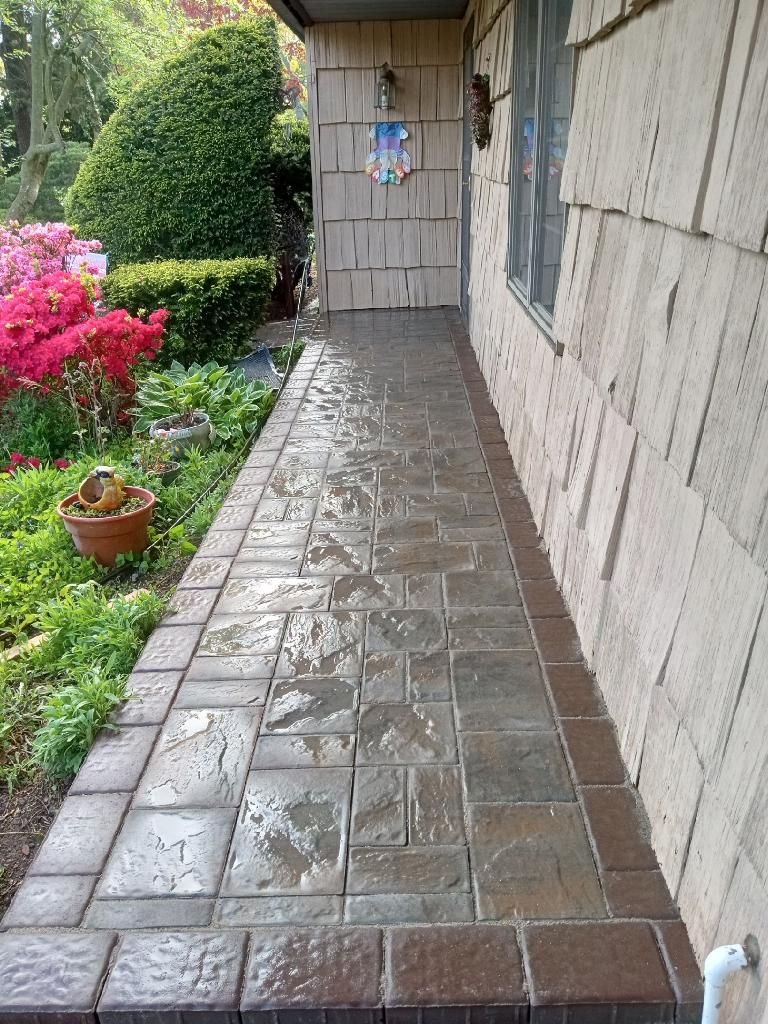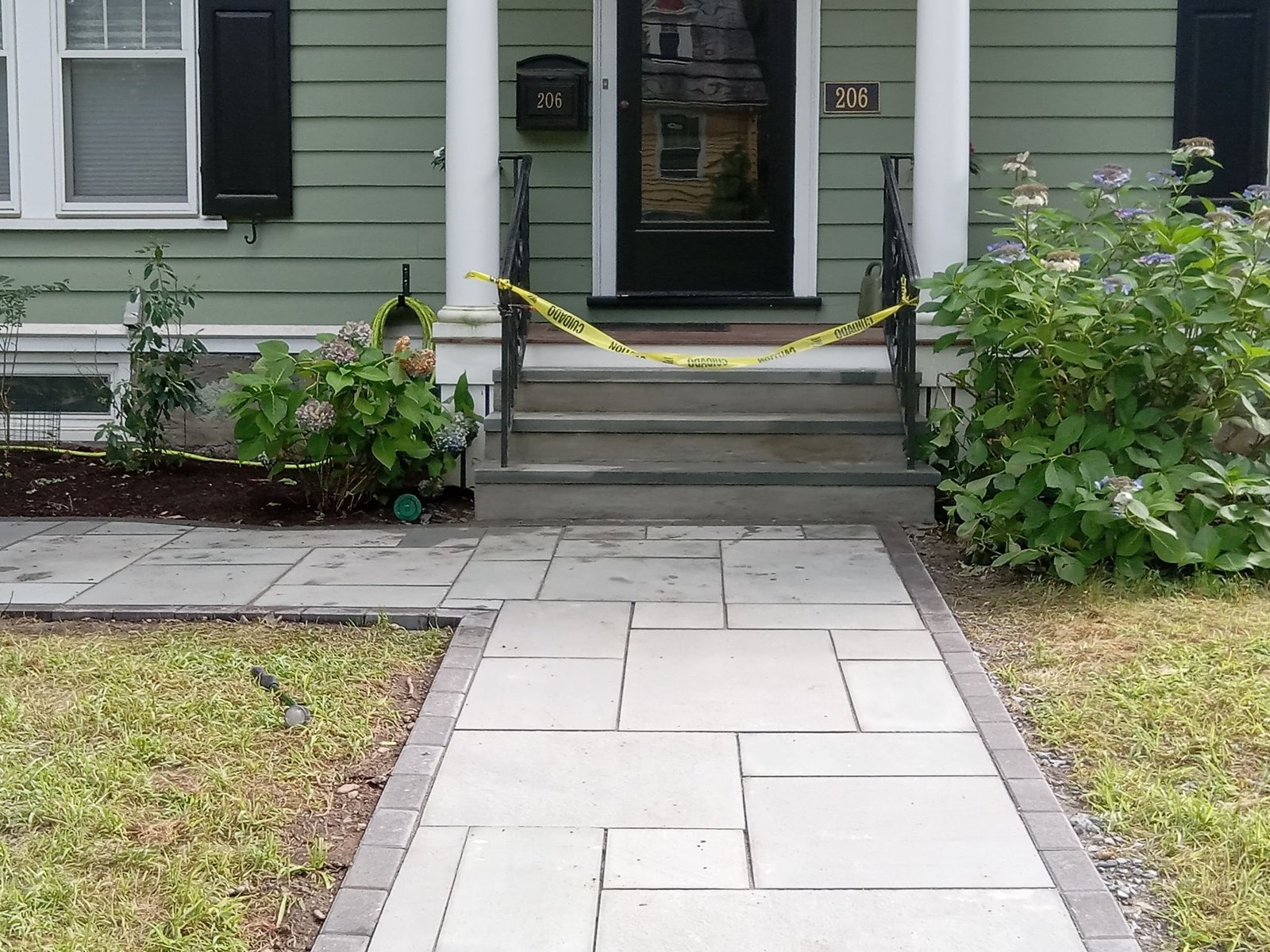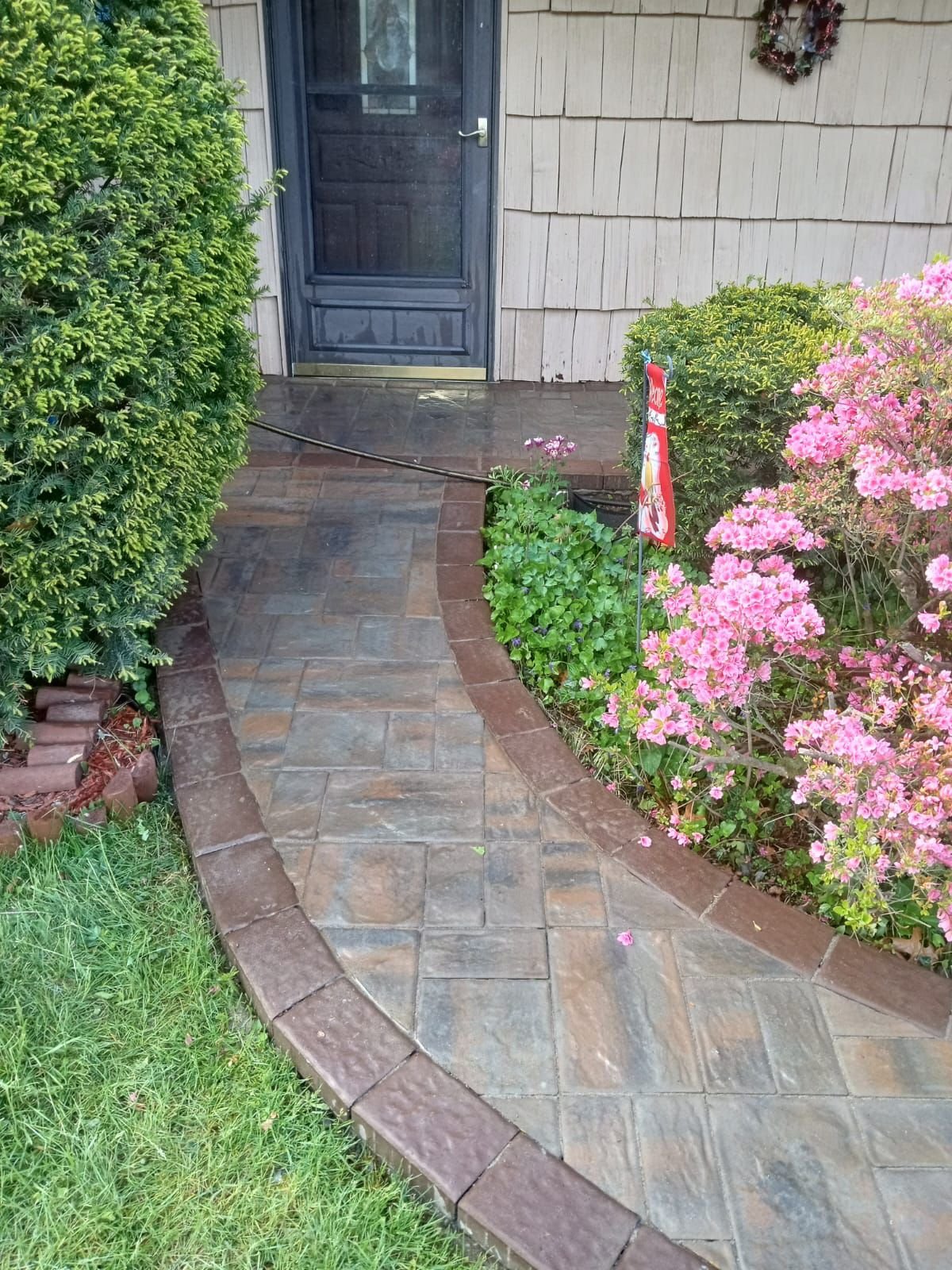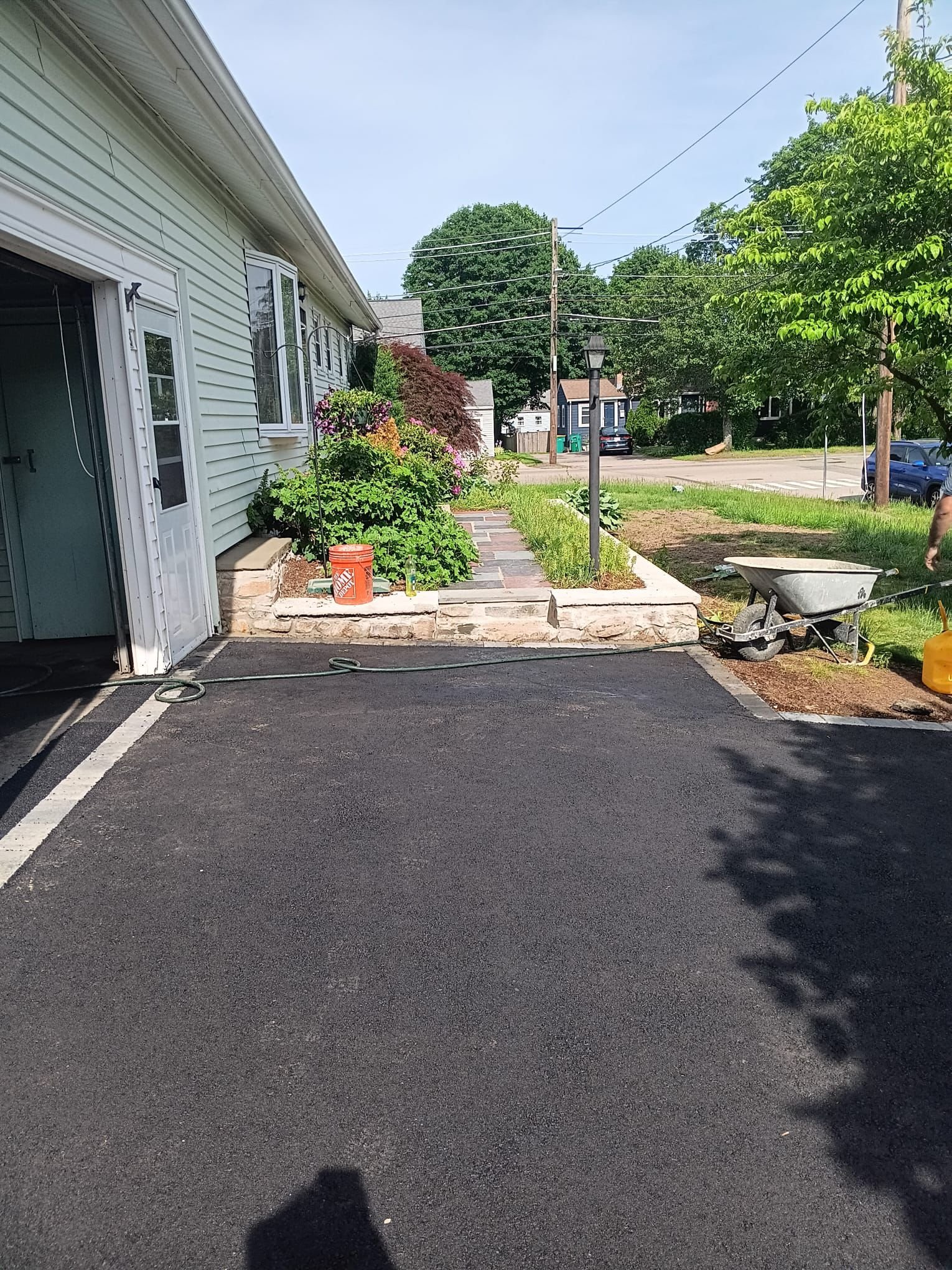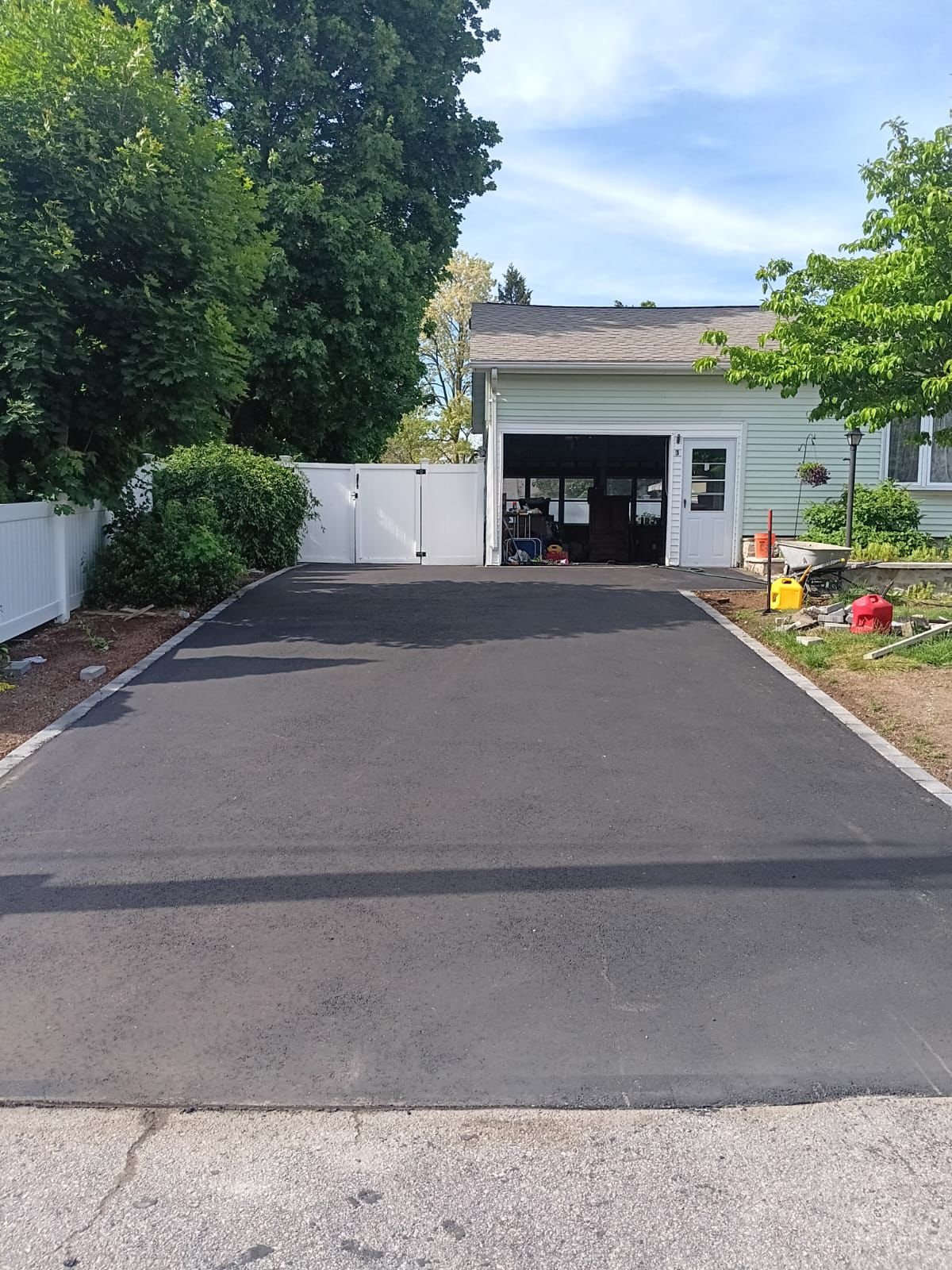
A paver patio should provide a comfortable, durable outdoor living area—not direct rainwater toward your foundation or leave puddles around your home.
When patio drainage is poorly designed, water can collect on the surface, enter the patio base, wash away joint material and saturate the soil beside the foundation. During a Massachusetts winter, trapped moisture and repeated freeze-thaw cycles can contribute to shifting, settlement and uneven pavers.
Proper patio drainage in Canton, MA, therefore involves more than installing a drain in the lowest part of the yard. The patio surface, base, surrounding grade, roof runoff and discharge location must work together as one drainage system.
Why patio drainage matters in Canton
Canton properties experience rain, snowmelt and winter temperature changes. If water cannot move away from a patio efficiently, it may remain within the paving system or collect around its perimeter.
That moisture can contribute to:
- Standing water and slippery patio surfaces
- Sinking or rocking pavers
- Erosion around patio edges
- Washed-out joint sand
- Weed and moss growth
- Ice forming in low areas
- Water collecting beside foundation walls
- Dampness or leakage in nearby basements
- Premature deterioration of steps and retaining walls
Concrete pavers themselves may remain serviceable while the supporting base beneath them deteriorates. This is why replacing only the visibly uneven pavers often fails to correct a recurring problem.
How a properly drained paver patio works
An effective patio drainage system controls water at several levels.
1. The surface directs water away
The patio should have a deliberate, consistent slope toward a safe drainage area. Water should not be directed toward the house, neighboring properties or an area where it will create erosion.
Industry guidance for segmental concrete paving recommends establishing drainage through the base rather than attempting to create the correct slope only in the bedding layer. The Concrete Masonry & Hardscapes Association also recommends a minimum base slope of 1.5% in applicable segmental paving installations. The precise design still depends on the patio system, elevations and site conditions. See CMHA’s construction guidance.
A contractor should measure the existing elevations before selecting the patio slope. Guessing by appearance can leave shallow depressions where water collects.
2. The base provides stable support
Pavers rely on the layers beneath them. A typical system may include compacted subgrade, aggregate base, bedding material and pavers, although specifications vary according to soil, use and product requirements.
A properly constructed aggregate base helps support the patio and maintain its intended grade. Poorly compacted material or an insufficient base can settle unevenly, creating depressions that collect water.
The patio should not depend on joint sand alone to manage runoff. Water must have a planned route across, through or away from the paving system.
3. Edge restraints keep the system together
Edge restraints help prevent horizontal paver movement and loss of bedding or base material at exposed edges. If an edge fails, pavers may spread, joints may open and the perimeter may sink.
Edge-restraint selection and installation depend on whether the pavers are placed over a flexible aggregate base or an existing rigid base. CMHA provides technical guidance for interlocking-pavement edge restraints.
4. Runoff reaches a suitable outlet
Moving water off the patio is only half the job. It must also reach an appropriate discharge point.
Depending on the property, that could involve:
- Positive grading toward a suitable landscaped area
- A channel drain along a patio edge
- A catch basin at a low point
- A solid drainpipe that conveys collected surface water
- A French drain for appropriate subsurface-water conditions
- A dry well where soil, space and local requirements permit
- A permeable paver system designed for infiltration
The correct solution depends on soil permeability, available fall, patio elevation, foundation proximity and the volume of water entering the area.
Warning signs your patio has a drainage problem
Canton homeowners should arrange an evaluation when they notice one or more of the following conditions.
Water remains after rainfall
A small amount of temporary surface moisture is normal during rain. Puddles that repeatedly remain in the same locations indicate depressions, poor grading or an inadequate outlet.
Pavers are sinking or rocking
Loose and uneven pavers can indicate base settlement, erosion or poor compaction. Water entering the base may worsen the movement over time.
Water runs toward the house
This is one of the most important warning signs. A patio that pitches toward the home can concentrate runoff beside foundation walls, basement windows or exterior stairs.
Joint sand disappears repeatedly
Some joint maintenance is expected, but rapid or recurring joint-material loss may indicate concentrated water flow, improper installation or failed edging.
The patio develops ice in the same places
Recurring winter ice often identifies a low spot or drainage route. Besides contributing to patio movement, it can create a slip hazard.
Basement dampness appears after storms
If basement moisture is concentrated near the patio side of the house, exterior grading and runoff should be evaluated. The patio may not be the only cause, but it can be an important part of the water-management problem.
Common patio drainage solutions
There is no single drainage method that works for every Canton property.
Regrading or resetting the patio
If the patio slopes toward the house or contains widespread low spots, portions of it may need to be lifted. The contractor can correct the base elevations, compact the supporting layers and reinstall the pavers with a consistent drainage plane.
Resetting pavers without repairing the base usually provides only a temporary cosmetic improvement.
Channel drains
A channel drain can intercept surface water along a doorway, step, patio edge or transition where changing the full grade is impractical.
The drain must be correctly sized and connected to a suitable outlet. A channel that has nowhere to discharge will simply hold water and debris.
Catch basins
Catch basins collect runoff at defined low points and convey it through solid piping. They can be helpful where surrounding grades direct surface water toward one area.
Basins require accessible grates and periodic cleaning to prevent blockage by leaves, soil and sediment.
French drains
A French drain is primarily intended to collect and redirect subsurface water. It should not automatically be used as a substitute for correcting a badly pitched patio.
Where groundwater or saturated soil is affecting the patio edge, a properly designed French drain may form part of the solution. Learn more about French drain installation and repair.
Permeable pavers
Permeable interlocking concrete pavement is an engineered system that allows water to enter through aggregate-filled joints and move into an open-graded stone base.
It is not simply a standard patio with wider joints. The subgrade, aggregate layers, overflow provisions and surrounding conditions must be designed as a complete system. CMHA publishes separate construction guidance for permeable interlocking concrete pavement.
How patio runoff can affect a foundation
Water naturally follows the easiest available route. If the patio directs runoff toward the home, the soil along the foundation can become repeatedly saturated.
That can increase the chance of:
- Water entering through foundation cracks or joints
- Damp basement walls
- Efflorescence on masonry
- Soil erosion or settlement
- Water entering basement windows or stairwells
- Added hydrostatic pressure against below-grade walls
Patio drainage is therefore part of a broader property-water-management plan that may also include gutters, downspouts, soil grading, foundation drainage and basement waterproofing.
Read more about how drainage protects a foundation.
Can an existing paver patio be repaired?
In many cases, yes. Individual pavers can be lifted and reused, allowing contractors to reach the base without demolishing the entire surface.
A professional assessment should determine:
- Where the unwanted water originates
- How the patio and surrounding ground are currently graded
- Whether the base has settled or eroded
- Where runoff can legally and safely discharge
- Whether roof water contributes to the problem
- Whether a drain, grading correction or combined solution is needed
Localized settlement may require only a targeted repair. Widespread movement or reverse pitch toward the house may require a larger patio reset.
For installation and repair options, visit the Canton patio paver service page.
How much does patio drainage repair cost in Canton?
Cost depends on the cause and scope of the problem. Important factors include:
- Patio size
- Number of pavers that must be lifted
- Condition and depth of the existing base
- Accessibility for excavation
- Drain type and required capacity
- Length of underground piping
- Available discharge location
- Soil conditions
- Steps, walls or landscaping near the work area
- Whether foundation waterproofing is also necessary
A small low-spot correction will cost less than rebuilding a large section and installing a complete drainage system. An on-site inspection is the most reliable way to develop an appropriate repair scope.
Patio drainage maintenance tips
Homeowners can reduce preventable problems by:
- Keeping channel drains and catch-basin grates clear
- Directing downspouts away from the patio and foundation
- Removing leaves before they block drainage paths
- Watching where water travels during heavy rain
- Replacing lost joint material with the appropriate product
- Addressing loose edge restraints promptly
- Avoiding landscape changes that trap water beside the patio
- Scheduling an inspection when new settlement appears
Do not assume sealing a patio will correct poor drainage. A sealer may help with certain surface-maintenance objectives, but it cannot reverse an improper slope or repair an unstable base.
Professional patio drainage services in Canton, MA
A durable patio begins below the visible pavers. Proper excavation, base preparation, grading, edge restraint and water discharge all help the paving surface perform as one system.
iFix Masonry and Home Improvements provides patio paving and drainage solutions for homeowners in Canton and surrounding Greater Boston communities. The team can evaluate standing water, sunken pavers, damaged bases and runoff near foundations before recommending an appropriate repair.
Call (617) 251-3916 or contact iFix Masonry to request an assessment.