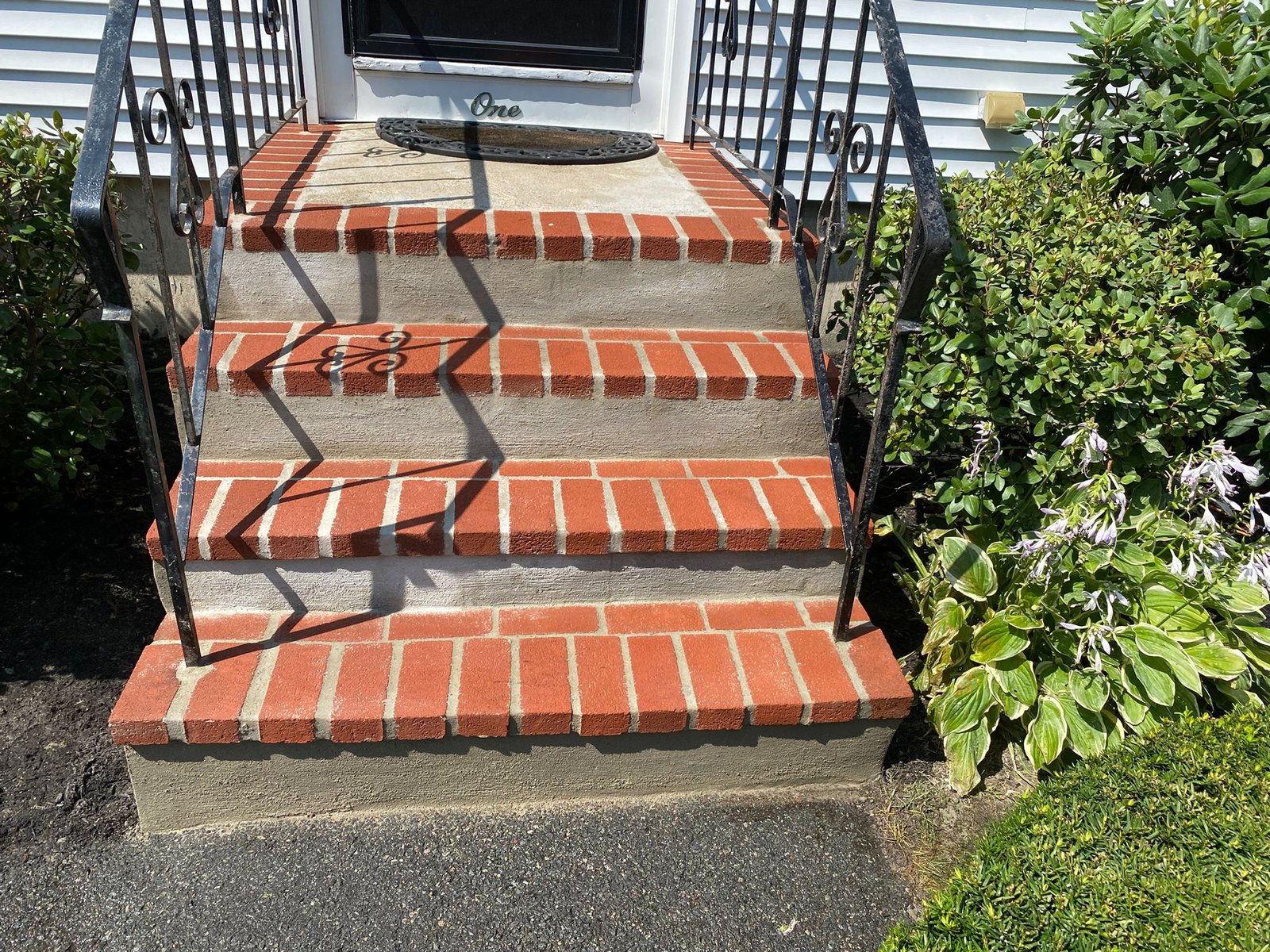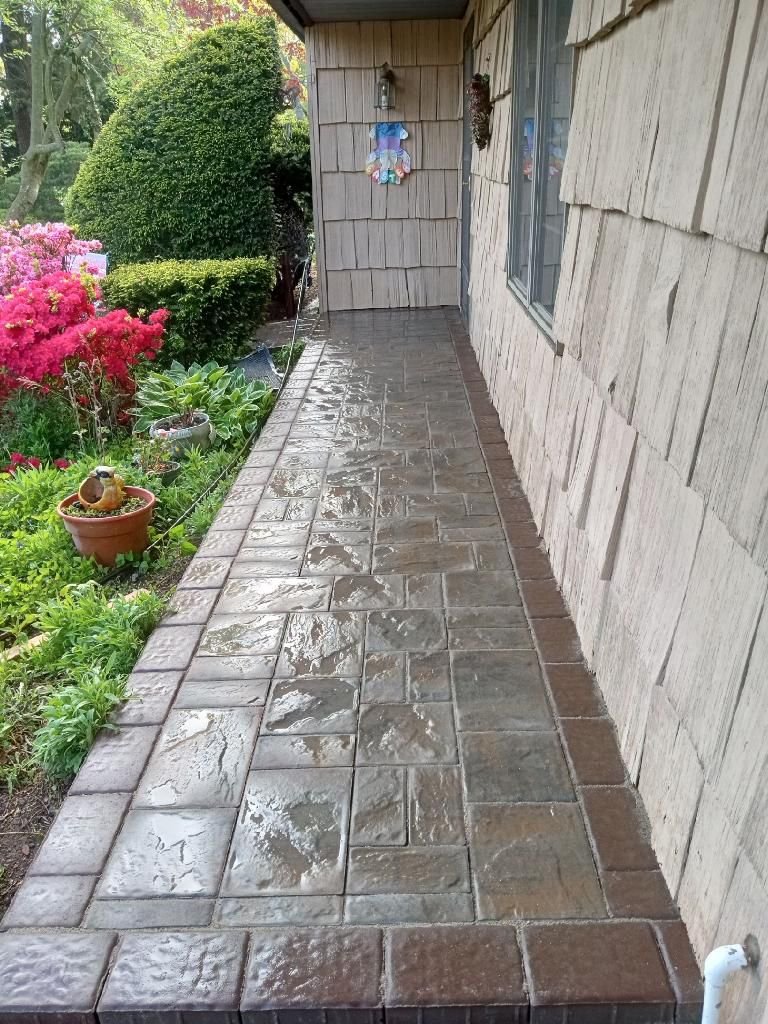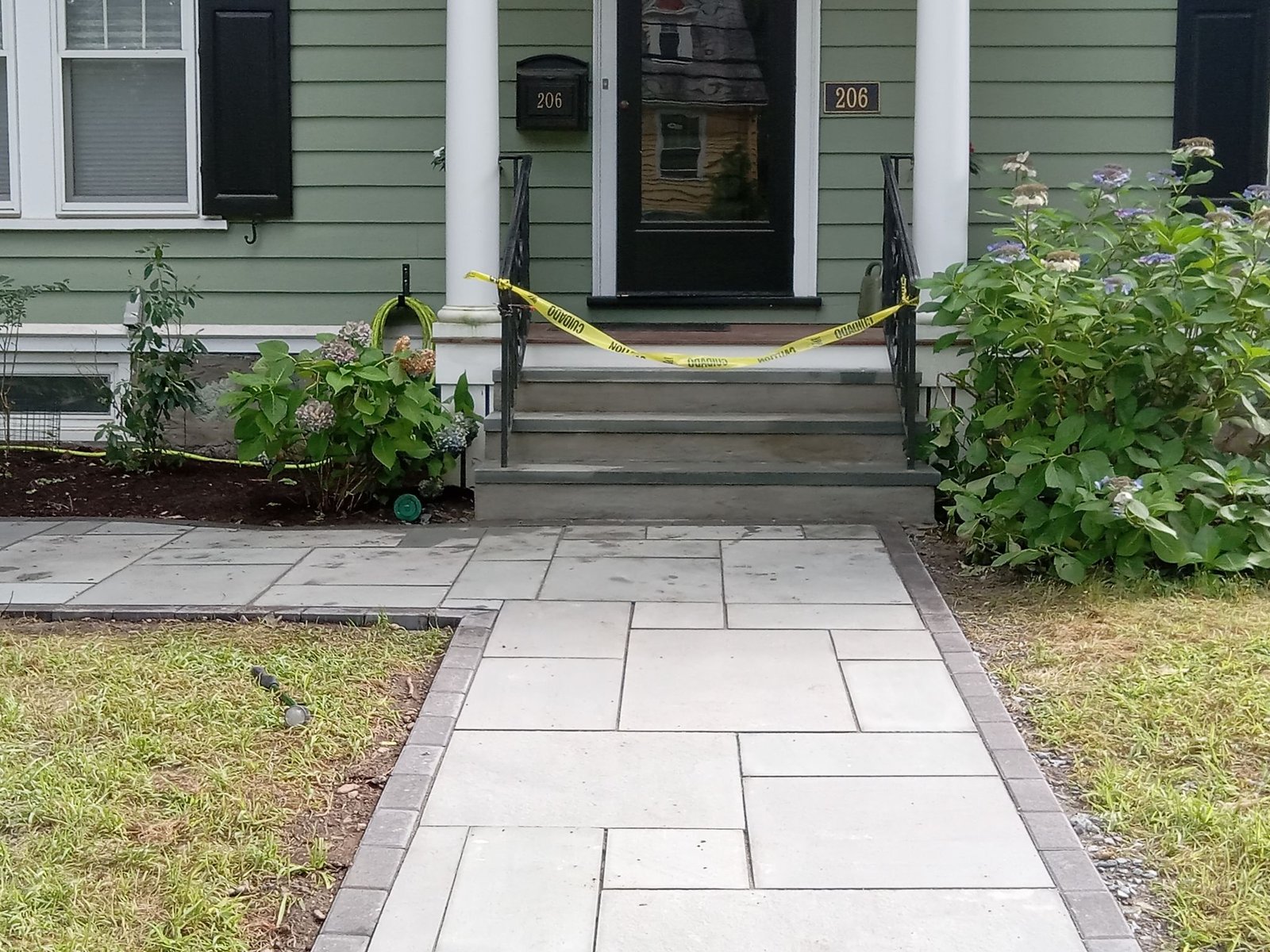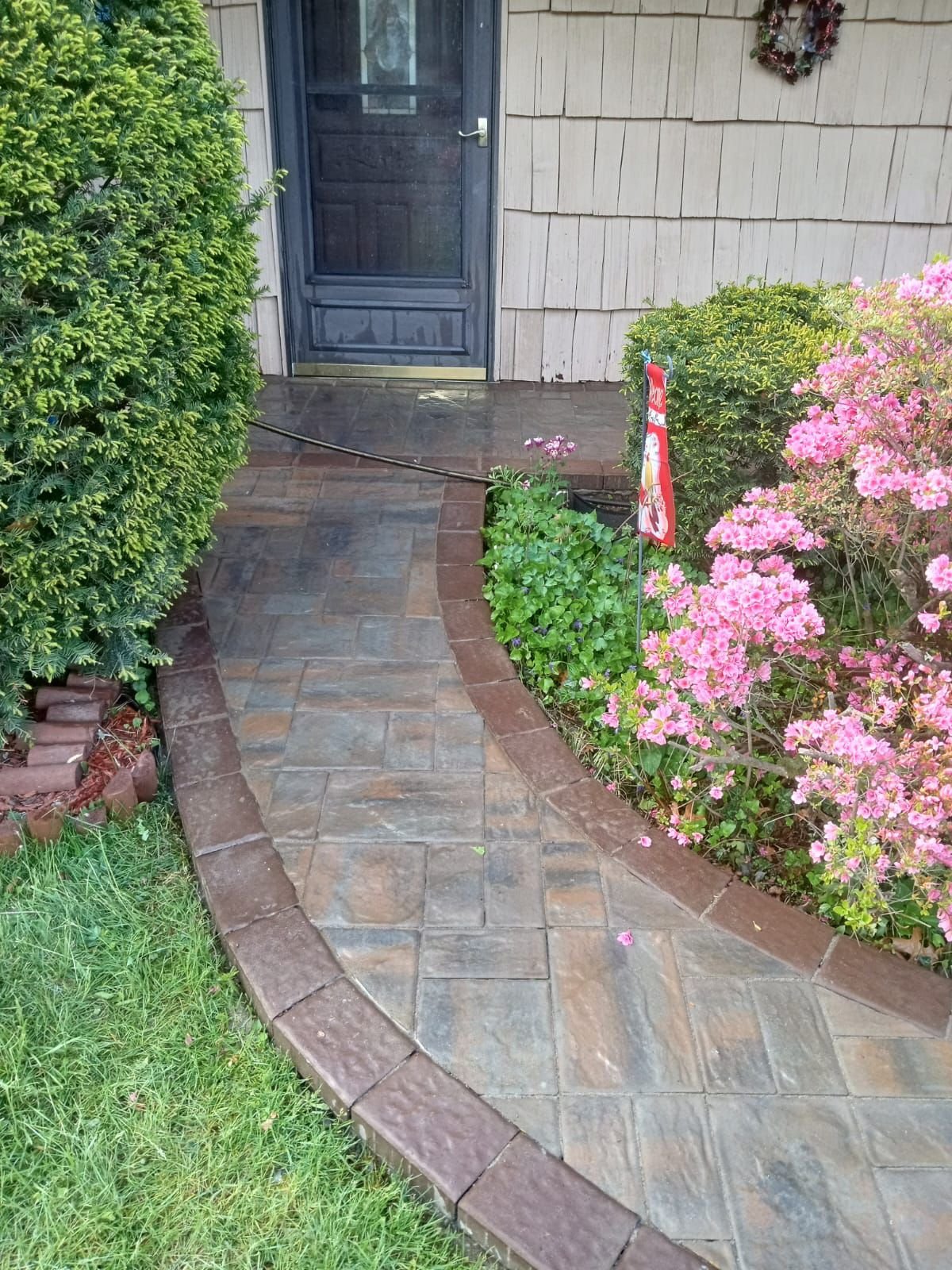
Concrete steps provide a strong, practical entrance to a home, but years of moisture exposure, winter freezing, de-icing products and everyday use can eventually cause cracking, spalling, settlement and surface deterioration.
Damaged steps are not merely unattractive. Loose concrete, uneven risers, unstable railings and sunken sections can create safety concerns for family members, visitors and delivery workers.
When damage appears, West Roxbury homeowners often face an important question: should the concrete steps be repaired, resurfaced or completely replaced?
The right solution depends on whether the damage is limited to the surface or extends into the structure, base or connection with the property. Minor cracks and isolated spalling may be repairable, while extensive settlement, deep deterioration or structural movement can make replacement the more dependable choice.
Quick answer: Should concrete steps be repaired or replaced?
Concrete steps can often be repaired when:
- Cracking is minor and stable
- Damage is limited to small areas
- The steps remain level and secure
- The base has not significantly settled
- Reinforcing steel is not extensively corroded
- Most of the concrete remains solid
- The risers and treads are still properly aligned
Replacement may be more appropriate when:
- Steps have pulled away from the home
- Several treads or risers are broken
- The structure rocks or moves
- Settlement has made the steps uneven
- Large areas are crumbling or spalling
- Reinforcing steel is exposed and corroded
- Water is repeatedly collecting beneath the steps
- Previous repairs continue to fail
- The step dimensions or layout create a safety problem
A professional inspection can determine whether the visible damage is superficial or connected to a larger base, drainage or structural problem.
Why concrete steps deteriorate in West Roxbury
Concrete is durable, but it is not unaffected by Boston-area weather and property conditions.
Freeze-thaw cycles
Concrete contains small pores that can absorb moisture. When saturated concrete freezes, the water expands and places internal pressure on the material.
Repeated freezing and thawing may cause:
- Surface scaling
- Flaking
- Cracking
- Pop-outs
- Spalling
- Progressive loss of concrete
Damage is often worse when water regularly collects on or around the steps.
Water infiltration
Water can enter through cracks, unsealed joints and damaged surfaces. It may also collect underneath the steps when grading or drainage is inadequate.
If the water freezes or washes away supporting soil, cracks and settlement can worsen.
De-icing salts
Certain ice-control products may contribute to surface scaling and deterioration, particularly when concrete is already saturated or insufficiently durable.
Homeowners should avoid excessive chemical use and follow appropriate winter-maintenance recommendations for their concrete.
Base settlement
Concrete steps need stable support. Poorly compacted soil, erosion, drainage problems or changing ground conditions can cause the steps to sink, tilt or separate from the building.
Repairing surface cracks will not correct an unstable base.
Reinforcement corrosion
When moisture and salts reach steel reinforcement, corrosion may develop. Rust occupies more volume than the original steel and can push surrounding concrete outward, causing cracking, delamination and spalling.
Impact and physical damage
Snowplows, shovels, heavy objects and repeated impact can chip stair edges and corners. Once an edge breaks, moisture can enter the newly exposed concrete.
Age and previous repairs
Older steps may have widespread wear or repairs made with incompatible materials. Patches that were installed without sufficient surface preparation may separate after only a few seasonal cycles.
Signs your concrete steps may be repairable
Repair may be practical when the underlying structure remains sound.
Small, stable cracks
Hairline or narrow cracks may sometimes be cleaned, prepared and filled with an appropriate repair material.
However, the cause must still be considered. A crack that continues to widen should not be treated as a simple surface defect.
Localized surface spalling
A limited spalled area can sometimes be removed and rebuilt with a suitable concrete repair system. The remaining concrete must be sound enough to support the repair.
Chipped corners or edges
Broken stair noses and corners may be reconstructed when the surrounding material remains strong and the damage has not affected the overall step geometry.
Worn or rough surfaces
Resurfacing may improve a worn surface when the concrete below is stable, properly supported and free from widespread deterioration.
Isolated joint damage
Open joints where the steps meet a walkway or stoop may be repairable if there is no major displacement.
Signs replacement may be the better choice
Repairing severely deteriorated steps can become a short-term solution. Replacement may provide better value when the existing structure cannot offer a reliable base for repairs.
Extensive cracking
Multiple deep cracks running through several treads or risers may indicate structural deterioration or movement.
Significant settlement
Steps that have sunk, tilted or separated from the landing usually require correction of the base—not only surface patching.
Loose or unstable sections
Concrete stairs should feel solid underfoot. Movement or rocking can indicate failure beneath or within the structure.
Widespread spalling
If large areas are breaking apart, removing and patching every damaged section may not be practical.
Exposed reinforcement
A small exposed area may sometimes be repaired, but extensive corrosion can compromise the concrete and reinforcing system.
Repeated repair failure
If cracks and patches return, the original cause may not have been corrected. Continuing to patch the surface may cost more over time than replacement.
Unsafe stair layout
Uneven riser heights, narrow treads or an awkward landing can create a tripping hazard. Replacement gives the contractor an opportunity to improve the configuration, subject to applicable requirements.
Concrete step repair options
The repair method should be selected according to the type and extent of damage.
Crack repair
The crack is cleaned and prepared before an appropriate repair material is installed. Some cracks may require routing, sealing or a more specialized repair method.
Crack repair is most useful when the movement has stopped and the concrete surrounding the crack remains sound.
Concrete patching
Loose and deteriorated concrete is removed until sound material is reached. The area is cleaned, prepared and rebuilt with a compatible repair product.
Proper preparation is critical. Applying a thin patch over loose concrete will not produce a dependable repair.
Edge and corner rebuilding
Formwork may be installed around a broken stair edge or corner so the missing section can be reconstructed. The repair must bond properly and restore a safe, consistent edge.
Concrete resurfacing
Resurfacing places a new bonded layer over a properly prepared surface. It can improve appearance and address limited surface wear.
Resurfacing is generally unsuitable when steps are moving, extensively cracked or deteriorated throughout their depth.
Step leveling
Certain settled steps may be raised or stabilized, depending on their construction and condition. This is only practical when the steps themselves remain sufficiently sound.
Joint repair and sealing
Open joints can be cleaned and resealed to reduce water entry. Drainage and movement must also be evaluated.
What happens during concrete-step replacement?
Replacement involves more than demolishing the old steps and pouring new concrete.
A professional project may include:
- Inspecting the steps, landing and foundation connection
- Protecting doors, siding, walkways and landscaping
- Removing and disposing of deteriorated concrete
- Evaluating the soil and underlying support
- Correcting drainage or erosion problems
- Preparing and compacting a stable base
- Installing forms to create consistent treads and risers
- Adding reinforcement where required
- Placing concrete suitable for exterior exposure
- Finishing the surface for traction and appearance
- Allowing the concrete to cure properly
- Reinstalling or upgrading railings where applicable
Good base preparation and water management are essential to the longevity of new steps.
Repair versus replacement comparison
| Factor | Repair may be suitable | Replacement may be better |
| Cracking | Minor and stable | Deep, widespread or actively moving |
| Spalling | Small localized areas | Multiple faces or large surface areas |
| Settlement | Little or none | Steps have sunk, tilted or separated |
| Stability | Steps remain solid | Steps rock or move |
| Reinforcement | Not exposed or minimally affected | Extensive exposed or corroded steel |
| Previous repairs | Few or none | Several repairs have failed |
| Base condition | Stable and well-drained | Eroded, poorly supported or saturated |
| Stair layout | Safe and consistent | Uneven, awkward or unsafe dimensions |
| Appearance | Local repair can blend acceptably | Repairs would remain highly visible |
Why drainage matters around concrete steps
Water is one of the most common contributors to damaged exterior concrete.
Check for:
- Roof runoff falling near the steps
- Short or disconnected downspouts
- Walkways sloping toward the entrance
- Water collecting beside the stoop
- Soil erosion around the base
- Open joints against the building
- Snow piled against the steps
- Downhill runoff reaching the entrance
Potential improvements may include:
- Extending downspouts
- Correcting nearby grading
- Repairing walkway slopes
- Sealing appropriate joints
- Installing drainage channels
- Stabilizing soil around the base
- Redirecting roof and surface runoff
Drainage corrections should be made before or during the repair so water does not undermine the finished work.
Are damaged concrete steps a safety concern?
They can be. Conditions that may increase fall risk include:
- Uneven tread surfaces
- Broken stair edges
- Loose concrete
- Inconsistent riser heights
- Tilting steps
- Unstable railings
- Ice forming in depressions
- Poor surface traction
Property owners should address dangerous conditions promptly and restrict access if a step is unstable.
How much does concrete-step repair cost?
The cost depends on the condition, dimensions and repair method.
Important factors include:
- Number of steps
- Size and depth of cracks
- Extent of spalling
- Whether reinforcement is exposed
- Accessibility
- Demolition requirements
- Base preparation
- Drainage improvements
- Railing removal or installation
- Surface finish
- Disposal requirements
- Connection to the home or landing
Small localized repairs generally cost less than complete demolition and replacement. However, repeated repairs to unstable steps can become more expensive than replacing them correctly.
An on-site assessment is the best way to obtain a meaningful estimate.
Can concrete step repairs match the existing finish?
A contractor can select repair materials, pigments and finishing techniques to improve the match, but a completely invisible repair is not always possible.
Factors affecting the finished appearance include:
- Age of the existing concrete
- Weathering
- Aggregate
- Cement color
- Surface texture
- Previous coatings
- Repair size
- Curing conditions
If appearance is a major concern and damage is widespread, resurfacing or replacement may produce a more uniform result.
When is the best time to repair concrete steps?
Concrete repair and replacement require suitable temperatures and protection from:
- Freezing
- Heavy rain
- Excessive heat
- Rapid drying
- Foot traffic during curing
Spring, summer and early fall often provide suitable conditions in Massachusetts, but contractors can work during a broader season when proper products and protection are used.
Emergency safety issues should still be evaluated immediately, even if permanent work needs to be scheduled for more suitable conditions.
Maintaining repaired or new concrete steps
To extend the life of the work:
- Keep gutters and downspouts clear
- Prevent water from collecting around the base
- Remove snow using non-damaging tools
- Avoid chipping ice with metal equipment
- Use appropriate ice-control products
- Repair small cracks before they spread
- Keep joints properly maintained
- Avoid inappropriate surface coatings
- Inspect railings regularly
- Schedule an inspection if settlement appears
Concrete performance depends on both the original installation and ongoing water management.
Concrete step services in West Roxbury
iFix Masonry and Home Improvements provides professional concrete work in West Roxbury and surrounding Greater Boston communities.
Our services include:
- Concrete step repair
- Concrete step replacement
- Stoop installation and rebuilding
- Crack and spalling repair
- Stair-edge reconstruction
- Concrete resurfacing
- Walkway repair
- Drainage improvements
- Brick and stone steps
- Custom steps and stoops
We serve West Roxbury, Boston, Brookline, Cambridge, Newton, Waltham, Canton, Dedham and surrounding areas.
Request a concrete-step estimate
If your concrete steps are cracked, crumbling, uneven or pulling away from your home, arrange an inspection before the deterioration becomes more extensive.
Call: (617) 251-3916
Email: info@ifixmasonry.com
Address: 437 Turnpike St, Canton, MA 02021
Contact iFix Masonry for a concrete-step repair or replacement estimate in West Roxbury.